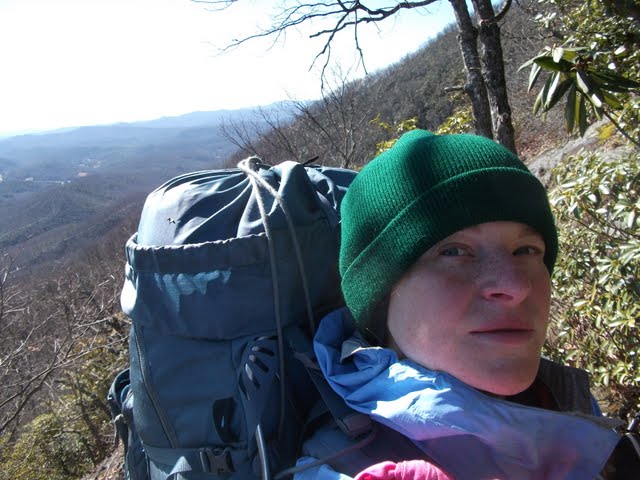
Wednesday, May 2, 2012

Book Review: Wild

I just read Cheryl Strayed’s Wild about her three-month journey on the Pacific Crest Trail in 1995, what led her there, what kept her there, and the growth and healing found through her near thousand-mile walk.


It’s full of contradictions that mutually reside in us and around us. In this way we bear witness, along with Cheryl, to feelings of emptiness in a vast world, and the vastness felt in one devoid of excesses.

Cheryl captures the hardship, beauty, wonder, and guts of a long distance hike. She is brave. She is flawed. Best of all, she speaks authentically about all of it, stripping down the complexities of her life and her decisions so we can ache in her loss, feel nostalgia for relationships past, and understand her steadfastness in hiking alone.

I found myself thinking she repeats herself sometimes with some of the story's elements, but that is easily forgivable because of the intricate web she cast to lead us between life on the trail and life before the hike.

* * *

I gobbled this book up. I read half Friday afternoon and evening. I read the remainder on Sunday, but all Saturday I held the book in my hands as I visited with family, wishing for the time to step back on the trail with Cheryl to see where her adventure would take us next.

Before I opened the cover of Wild on Friday, I wrote in my journal about my confusion and despair about the day – of feeling overwhelmed with life’s purpose, creative vision, and too many competing business ideas.

"So I sit in this stew of discontent. Unable to decide if I should read a book on hiking that will either a) drive me out of my home and on a single-minded vision to hike the better part of this year b) make me compulsively wonder how I can start to write about my own backpacking pursuits, or c) send me spiraling into depression for the fear that I’ll never write my story nor have the fiscal resources to do that kind of travel this year."

I want to thank my hiking buddy Morph who brought me Wild as a gift when he came to visit last month. You’re right; I enjoyed it a lot!


Sunday, April 22, 2012

Book Review: Born to Run


It started with almost too much mystery. A hidden culture. A mythical, ghost-like figure whose purpose was obscured. An anthropological study of canyon-dwelling natives. 

 It took about 70 pages before the pace of the book picked up and flowed. It’s almost like the first couple miles of any run, slightly labored. Once I advanced beyond the entry point, the body of the Born to Run opened up into a tale I couldn’t stop myself from following right through to the author’s last word.

The essence I took from the book is that running can and should be enjoyable. The characters, the best of them, run for no other reason than pleasure.

In reflecting on this truth, I recall that my most profound periods of success with running have come when I use running as a salve for my woes: as a way to relax after work, to jumpstart a weekend, to reconnect with myself, or to commune with friends. I’m most content in my runs when it’s not competitive, but a form of renewal.

I gathered this is how it started for some of the ultra-marathoners featured in Born to Run. They didn’t set out to be awesome distance runners. They ran for pleasure; their success was a side effect of the elation felt in the run that carried them further and faster.

I think these same qualities apply with long hikes, too. It’s the heart you put in it. When you find a love of life for and through the movement, it feels like you can go on forever.

McDougall gives readers a fascinating look at the philosophy and psychology of successful distance runners as much as the physiological constructs of the human body built to run. The fundamentals come down to building as much soul as strength, but the run-fast formula is laced throughout the book in research studies, anecdotes, and practical applications.  

It’s more than a how-to book to running. It’s a gripping story of a amazing races, unforgiving terrain, kindhearted people, and a dedication to something bigger.

After all, McDougall writes: “The reason we race isn’t so much to beat each other but to be with each other.”

Friday, April 20, 2012

Down to Earth Diva: The Evolution of a Hiking Skirt


I haven’t done the math, but I’ve probably walked 4,000 miles in skirts. It started with my decision to hike in a skirt when I hiked the A.T. in 2003.
On the Pacific Crest Trail in 2010.

About two months ago catalogs selling clothing for active women started arriving. I suspect race directors for the Nashville Marathon sold my name. Athleta and Title 9 have become regular circulars in my post office box since then. I was flipping through them over lunch one day, scanning pages for skirts with just the right details – synthetic fabric, pockets, A-line, and without under-shorts. It turned into one of those moments when you step outside yourself and observe the absurdity for a moment. Here I am, with plenty of skirts for running, hiking, and playing in, yet seeking more.

While some might consider it an obsession, I consider it a quest for the perfect skirt (then again, I’m always on a quest for the perfect backpack, too). Regardless of the fixation that drives my compulsion to purchase and try out every skirt made of wicking material (and they’re even more common now that running skirts are on the rise (no pun intended, though they do tend to be shorter that what I’d like for hiking).

I’ll go ahead and admit here that I like to feel like I look nice even if I’m sweating. I don’t have to wear Prada on the trail, but some semblance of matching makes me feel, well, presentable – just like my momma taught. (oh, how many times did she chide me for looking like a ragga-muffin when I wore tore jeans and ratty tees in my younger years.)


Here’s a quick run down of the skirts I’ve hiked in, from the very first of my hiking skirts, to the latest and most preferred.

This grainy picture is one my mom took as I set off from Amicalola Falls to start my 2003 A.T. thru-hike. She captioned the photo. This skirt was not good for hiking. It’s a cotton blend and a wee short for backpacking without running tights under it. It worked fairly well otherwise, but by the time I reached Erwin I realized I needed another kind of fabric. I talked to POG at Miss. Janet’s house. She recommended a supplex material. I ordered some from Quest to be sent to my mom and gave her my vision for a wrap skirt, with Velcro closure at the waist. She would mail it to me at a future mail drop stop. (As for this skirt, I still wear it for running and dancing.)


Between the time I placed my sewing order with my mom and received that skirt I made it to Trail Days in Damascus. I coerced the fellas with Granite Gear to stitch me a skirt with fabric they had on hand. They used my original hiking skirt as the guide, used a water resistant fabric that’s really intended for packs, and had it made in under an hour. They even went the extra mile, adding a zippered pocket, and applying seam tape to the seams. The pocket served me well, but the seam tape was probably overkill. It’s a well made skirt that albeit short works well for winter hikes when I plan to wear tights under it.  The fabric feels bomb proof, too. 

On my A.T. Hike in 2003.
Starting the Art Loeb Trail in Feb. 2012.
 
I don’t remember which Virginia town I was in when I got my red hiking skirt from my mom, but I hiked in it the rest of the way to Maine. It had its own quirks. My mom had put the pocket on the inside of the skirt (think under-shirt travel wallet) which made it pretty useless for anything except putting my plastic bag wallet in it when I was walking in towns. The under layer of fabric of the wrap skirt would work its way between my legs, so I had to cinch the fabric from the bottom part of the skirt up under my hip belt so I wouldn’t get snagged on my skirt. It wasn’t pretty to have my skirt all cinched, but it served the purpose. The fabric dried quick in the really rainy hiking season of 2003 and it had all other benefits of hiking in a skirt. 


When I came back from my long hike I was convinced I needed to get into making hiking skirts that were worth a damned. The market in 2003 was primarily designed for men. A few innovative outdoor companies started making men’s kilts before they adapted them for women (however backward that is). I teamed up with my friend Joanna and we started, then faltered, in the creation of a line of hiking skirts. Here’s one of the prototypes. The waistline works (I learned that it’s called a yolk, like “yo, drop a yolk on that”), and it has ample pockets. This sample is made from a rain coat material. We never could find fabric color and weight we were happy with for production, and my dream for that project slowly slipped away. 


I have a couple skirts from Cloudveil (same style, different color) that I bought in 2005 or so at Frugal Backpacker in Asheville. They’re decent skirts, but they can look a little dumpy. Last time I wore one someone asked me if it was a rain skirt. I suspect she asked because it has a little sheen to it. The one good thing about wearing these skirts is that I don’t love them, so it feels okay to just get them dirty. My same friend, Joanna, screen printed a crop formation on one of my skirts which makes it feel a bit more interesting. 
Starting last summer's hike on the Lakeshore Trail in the Smokies.

My solo hike through the Grayson Highlands last fall.

I have a couple of other Mountain Hardwear skirts that I also bought at Frugal intending to hike in them. I wore them hiking once or twice. While they have plenty of pockets (a plus for hiking) the cut is too narrow such that it restricts my stride. They’ve been relegated to town-only skirts, or maybe boating, but there’s nothing redeemable about them when it comes to the trail.

Last, but certainly not least, is a skirt I discovered while I was hiking the PCT. It’s made by Royal Robbins and rocks! I think it’s called the Discovery skirt. I had reservations when buying it because it zips up the back and I worried I would be irritated where the zipper is between my back and my pack. My fears were unfounded. The skirt has ample pockets (one for my camera, one for a bandana, and one for a snack or hiking guide pages). The best part of this skirt is that it conveys from trail to town easily. It doesn’t have that typical outdoor fabric look; it has a flat finish with no sheen. It’s long enough to preserve modesty. It doesn’t restrict my stride, and it even has a ruffle (need I say more!)


Last summer's weekly hikes with my niece and nephew. I have this skirt in green and slate.
Hope to get one in orange this year.
 In the whole scheme of things, I’d probably like to have it a couple inches shorter, but it’s the absolute best hiking skirt I’ve found to date. But, that doesn’t mean I won’t keep looking.

Hiking in a Skirt


I wrote this piece in early 2004.

I wore a skirt because I’ve always enjoyed wearing them: long ones, short ones, shear ones, jean ones, ones that flutter on the dance floor.  They make me feel like a woman: powerful, sexy and strong.  After every backpacking trip I can remember, I have rushed home to slip one on; because in doing so, I reconcile my feminine side with the part of me that can get dirt under my nails, not shower for a week, and eat food that has fallen on the ground.   That was the biggest reason I decided to wear a skirt on this epic – ok, six month – journey from Georgia to Maine on the Appalachian Trail.  It would define me as a woman and as an individual.  As I donned my homemade bright red wrap around skirt, fastened with Velcro at the top, I wanted to share with the world that a woman can hike 2,000 miles in a skirt. She can do anything she puts her mind to; she is strong.


I hiked in a skirt – but there was nothing feminine about it.  At times I had mud up to my knees.  My hair was matted so thickly between my showers in towns that it took 30 minutes of combing to untangle and lay flat the locks.  I smelled; my belongings smelled.  My wallet was a plastic bag.  My “umbrella,” a garbage bag.  Typifying my outdoor living was this skirt that had become a darker shade of red on the back from ground-in dirt and sweat, the front was faded from exposure to the sun.  Nothing says well-worn like a two-toned article of clothing.  

Here we are turning compost as our work-for-stay duty at Lake of the Clouds Hut.

Hiking in a skirt wasn’t always pretty.  I left some of my behind on a rockface in Maine because my sneaker slipped from the foot hold immediately calling to question my shimmy-down-the-rock method; shorts may have ripped but my butt would have been safe.  I crossed Franconia Ridge in my wrap in such high winds that every attempt to lift a leg and place it in front of me resulted in my leg being two feet to the right.  Needless to say, I showed at least half of New Hampshire my zebra print undies that day, and left an indelible memory in the minds of my hiking partners.  Sometimes, I even got a hurtful comment or two from comrades.  Some male hikers, perhaps threatened by my hiking ability or caught in their generational frame of mind, made comments about “chasing the skirt,” as I was passed them on the trail.  I still waiver on the question their ignorance, insensitivity or attempt at humor. 

But, it had its perks, like peeing standing up and with my pack on.  Now this may seem silly, but I drank a lot of water - over a gallon a day - so the call to nature was frequent and cumulatively time consuming. For the first 600 miles of this trip, and every hiking trip before, I would unfasten my hipbelt, set my pack down, and take out my toilet paper and the plastic bag for disposing the used paper.  I’d find a nice place to pee, then work everything in reverse: putting the toilet paper away, hoisting the pack back on, and fastening my hipbelt before moving forward.  Discovering I could pee standing up, grab a couple of accessible and nonpoisonous leaves with which to wipe, cut my pee stop times in half and made me a more efficient hiker.

I got a lot of odd looks from people, and was asked to explain myself through that squinted eyeball of scrutiny as someone looked from my mud covered boots, up my sinewy legs, to the skirt, the backpack, nostrils flared as they caught the smell, and the inquiry began: “You hike in that?”  This question came from hikers and non-hikers alike.  After explaining the benefits of comfort, freedom of movement and discretion when dressing in shelters or hostels, people seemed to get it.  For female hikers bewildered by my chafe-free claim, I shared my secret weapon: BodyGlide, a body lubricant used by runners, which I applied ritualistically each morning.  The ability to pee standing up was received with much enthusiasm, and was the turning point for many of them to make the switch.   

The Lemon Squeezer in New York.
Pack goes through first.

I wasn’t the only woman on the trail, but what I found was that I became a spokesperson for women on the trail, perhaps because of my chosen attire.  I answered all kinds of questions: “Yes, I’m hiking alone,” “No, I’ve never felt threatened by anyone on the trail,” or “I’ve seen bears, but they are more interested in blueberries than me; I’ve avoided the snakes by giving them plenty of room; and, generally, shelters are home to at least one spunky mouse.” 

As my journey evolved, so did I.  Initially, I may have been a woman hiking the trail, but for the last 1,000 miles, I was a hiker hiking the trail.  I knew that for every challenge that I faced, others faced it, too.  I set out to prove that women could hike the trail in a skirt, and so they can, but not all women will.  Not all men will either.  It is fortitude of mind and soul.  It is the individual journey that takes us places.  What we choose to wear is insubstantial.  


As for that two-toned red skirt - it is the best skirt I’ve ever worn, and it is safely quarantined to a plastic underbed box where its putrid smell and vivid memories are nestled until my next adventure. 


(This article ran in the June 2004 issue of Blue Ridge Outdoors and was performed as a monologue of women's stories presented by Phoenix Theater Company in Washington D.C. in the fall of 2004.)  

Saturday, March 24, 2012

Dreaming of Big Sky Contry

It's been a day of dreaming with my eyes open. I'm feeling nostalgic for a place I've never been in this lifetime. Actually, I drove through Montana once, on a 2010 return to the east coast after a term I refer to as "my year out west." I don't count that brief encounter as an official visit, though the majestic scenery from the interstate at 70 miles-per-hour only solidified more firmly what I've felt since 1996 - I must go there. 

Montana started calling to me during my summer break from college between my sophomore and junior years. I had traveled the past two summers, to St. Croix and Germany, respectively, and I equally longed for more travel as much as the opportunity to spend time with friends on the beach near my home. Staying put also afforded me time to visit with my mom and brother; things I cherished. Early that summer I surfed the Internet and found a job posting to wait tables or sell merchandise at Glacier National Park on the website www.coolworks.com. (Remember, this was still early-days of Internet, dial-up and all. Email wasn't yet a common-place form of communication.) I didn't apply for the summer employment opportunity in Montana. I don't think I even talked to anyone about it, but the desire lingered in me.

 I ended up waiting tables that summer in Charleston and swimming my fair share in the warm Atlantic waters of Folly Beach. It was a good summer, but in staying put I charged the mystic of a far away land, with big mountains,  snow capped peaks, high meadows, big sky, and the unknown.

Photo by Jon Sullivan
If I've had past lives I don't remember them, and I have a pretty healthy skepticism about whether our souls are reborn into new bodies in the first place. But, if I had a past life, I wonder if it was time spent pioneering the western frontier. What accounts for the nostalgia I feel for life on the open range?  Did I watch too many old westerns with my parents and grandparents? Or, does age impact our longing for "the way things were," because I don't remember gaining the emotionalism for the days-of-old until I was about 30. In any event, Montana has captured my imagination and my waking dreams. 

So as I talked out loud to myself today I questioned how I'll lay down the path to my dream. I asked:
When are you going to go? 
What form will it take? caretaking, hiking the Montana part of the CDT, biking, a travel writing gig, Glacier National Park
How will I do it?  
Will I learn to ride a horse while I'm there? 

As I asked the questions, they resonated in my gut like a singing bowl, a reverberation of excitement for the possibilities, for saying "yes" to opportunities, for the reality of organizing the longing into action, and all of that twinged with the aching unknown.

From 1996 to this day, there has been a magic hold on me that tingles when I think about Montana.

What long held dreams do you harbor? 

Monday, February 20, 2012

Running Buddy: Nick


I'm digging for rocks on the left
(which makes sense because that's generally a job I end up with).
Saturday I went to Bend of Ivy where Andrea and Tim have recently taken up residence and responsibilities. Andrea will start farming come spring, and she put a call out for help in building the hoop house where she’ll start all the plants that will grow, green, and nourish us all summer.
We used these drills to make tables where all the seedlings will get their start in this world.

The whole construction project came together so much easier this time around. This was the second time I helped put it together, and I think the experience of the first time made this assembly so much smoother, plus there was slightly less of a perfectionist approach.
A goodbye hug.
On my way home that afternoon I drove along Bailey Rd. As I passed by a church a runner was stretching beside his Jeep. Being gregarious and always on the prowl for running partners in Mars Hill, I turned around at the next available driveway and returned to the parking lot where I’d seen him. He was in his car by then and I thought I had missed my opportunity to talk up a new friend. I turned around to leave, and noticed his window down. I pulled in front of him, blocking his exit, rolled down my window and started a chat to see if he would be interesting in running together sometime.

He said he runs kind of slow – at an 8 minute pace – which made me wonder if he would feel comfortable at a 10 minute pace. I suggested that we try it once and see how it goes. He sent me a text and over the next couple hours we decided on a 9 a.m. run on Monday.

This morning I returned to the church parking lot where I met him a few days earlier; I was early so I got to take advantage of the time to stretch (which I really should do more of before runs anyway).

His footfall was heavy. I could imagine hearing the cartilage of his knees vibrating in the aftershock of the thuds as we started our run.

We couldn’t be more different and yet I think we seemed fairly well paired for the running. Ten years my junior Nick is just starting his law enforcement career, after lots of other employment – the military, car dealership, door-to-door insurance salesmen (who knew that job still exists!). He works in the Madison County Sherriff’s Office and is applying to join the ranks of the N.C. State Troopers. He 4-wheels his Jeep to remote areas of Forest Service roads. I walk to them.

We kept a brisk pace that was likely faster than a 10-minute mile for a three-mile loop on Bailey and Bruce roads. We carried on pleasant conversation and may well make good running buddies. I could at the very least use the sustained motivation of Monday morning runs with someone to hold me accountable.

Friday, February 17, 2012

Art Loeb Trail, part three

After breakfast on Sunday, we commenced with striking camp and stuffing our packs.

As I worked I noticed that unlike typical cold days when you exhale and watch the “smoke” float away; I exhaled and the air was so dense that my breath just hung in the air at my face, very slowly dissipating.

We tried to work in lockstep with our packing so we would be ready to leave at the same time so that neither of us would have to stand idle in the cold. At one point Marcus clutched his hands, put them between his thighs and said that his hands were so cold that he was going to cry. I’m no expert when it comes to men, but I do know that men never, ever confess they’re about to cry unless something is seriously wrong. Alarm bells were ringing for me now, so I jump to action. I offered Marcus my mitts to wear. He wouldn’t accept them no matter how much insistence I added as I shook them at him. I hadn’t even been using them and didn’t feel the need to, so it was beyond my belief why he wouldn’t take them.

At 7:45 we were ready to hike. When we reached the little forest road before Rich Mountain Marcus was still suffering from the pain of cold hands and cold feet. He described them as footballs. They ached. I offered my mitts again. This time he took them. We easily popped up and over Rich Mountain. By the time we descended to Gloucester Gap I had started asking questions about how much water Marcus drank the day before. He basically drank one liter for the ten-miles we walked on Saturday, and used a half liter to three-quarters of a liter the night before, largely to prepare dinner. Comparatively, I drank at least 2.5 liters for the hike on Saturday and drank most of another liter after we arrived at camp and throughout the night.

At Gloucester Gap I insisted that he drink water, but he argued that he was too cold to drink cold water. He said he just wanted to get to the shelter at Deep Gap and make a hot drink. I said I wasn’t going to move until he drank water. He still resisted. I told him to at least eat something, and knowing that he wouldn’t want to stop to eat any of his food, I gave him one of my bars. He ate it and said later I tricked him into drinking water by giving him such a dry bar. Nevertheless, the fuel and water did start to improve his condition. (I suspect he was approaching hypothermia, as dehydration will advance its onset.) As he realized he was feeling better he continued to drink his water as we climbed the steep tread of Pilot Mountain. His hands and feet started to regain feeling, too.


When we were at Gloucester Gap, I offered for the second time that day to bag the trip due to cold. I felt like I’d rather be smart than driven by ego or macho expectation to complete the trail we started. It’s also part of assessing the safety of any situation, like having an “emergency exit” when driving. Marcus declined turning back the two times I mentioned it.


We moved slowly as we progressed up Pilot. I knew it was a difficult climb. Andy had warned me. The guidebooks said the switchbacks get progressively steeper and shorter the closer you get to the top. They got shorter and steeper and I thought we had topped out. We dropped briefly in elevation and I thought we had reached Deep Gap (turns out we weren’t there yet). Marcus and I spent a little time scouting the gap for the shelter and spring here but never found either. We sat to eat an early lunch at 11:30. By noon we reassessed our situation. Marcus had no water. I was really low. The hikers the day before didn’t reliably tell us there was water at Deep Gap or farther north, and we started to question the reliability of water sources in the Shining Rock Wilderness. The kicker was that we had only traveled at a pace of one-mile-an-hour or less to our current location; yesterday we had traveled at a two-mile per hour pace. We weren’t making good time and there was no telling if that trend would persist as we muscled up toward the Parkway and the more remote sections of the trail. It felt sketchy to proceed. This time Marcus proposed returning the way we came. The decision was a double-edged sword. We would travel farther in the reverse direction to get water we were assured of than water ahead of us that we weren’t sure about. It would mean we wouldn’t get to hike the remainder of the Art Loeb on this trip which was disappointing to both of us. It also created a scenario where we weren’t hiking to a car but would have to rely on a hitch out of the trailhead at 276. We were also turning around a smidge beyond mid-way, so we would actually hike a mile further to return the way we came. Ultimately though, the decision took into consideration Marcus’ dehydration, and the safety of proceeding on the trip for both of us. This, we both felt good about.


We reversed course. Pilot Mountain. Gloucester Gap. Rich Mountain. Our camp spot. Chestnut Mountain. We arrived at Butter Gap Shelter around 3:30. We refreshed empty water bottles. We cooked hot food. We drank lots of hot liquids. It was really windy at the shelter, even on Sunday once the wind advisory had passed. The day was still as bitterly cold as the day before. After an hour we felt we had sufficiently refueled, we continued south on the trail at about a mile to the water source and campsite we recalled seeing the previous day.

We set up camp as night fell. We were close enough to the creek that it was more moist terrain. Moisture makes you colder. The highly impacted campsite was barren, so there was little insulation between our mats and the cold hard ground. Nevertheless, we were grateful that it wasn’t as windy as the night before. I had a more difficult time regulating my comfort in two sleeping bags throughout Sunday night. Most assuredly one wouldn’t have been enough, but two was almost too much. My sleep was a bit more restless than the colder previous night, but I still managed to sleep a good bit. When you go to bed with the sun and wake with it, especially in the winter, your apt to get lots of hours of rest.

Over breakfast I drank two cups of trail coffee, Starbuck’s VIA. It’s the closest thing I’ve found to decent coffee on the trail, and I’ve tried everything – seriously, everything! I’ve tried Folgers singles coffee bags, but they’re too weak. I’ve done the obligatory tests of standard freeze-dried coffees that don’t even taste like coffee. When I thru-hiked the A.T. I mixed ground espresso beans, hot cocoa powder and water in a small peanut butter jar with a lid so I could shake it to create a cold mocha-java thing; it was pretty good but it’s not hot. I don’t care to pack out the grounds to do a sit-on-top drip coffee or a French press, and my LNT ethics won’t let me bury them, so those options are off the table.

There’s just something sophisticated about a cup of hot coffee on the Trail – a good cup of hot coffee. A cup of hot tea is equally sophisticated, for that matter. My hiking buddy Morph is so routine with his morning Starbuck’s VIA – in his preparation of the cup, to the stir, and the tap of the spoon on the rim of his plastic travel cup before he takes his first sip. When we hiked the A.T. together he drank a cup of Stash Chai tea every night after dinner; the smell of that particular brand of Chai tea still brings me back to my trail memories.

The same year I hiked the A.T. there was a woman named Sheep Stuff who hiked, too. Wherever she was at 4 p.m. every day, she stopped to prepare a cup of tea. How sophisticated is that? I love the idea that nothing is as important as stopping to honor break time, teatime. It seems like a communion of sorts. Even though hiking seems like a relaxed and enjoyable activity, long distance backpacking can be hard work. It’s sweet to think that we can take a break from anything, enjoyable or challenging, to honor the quiet space of sitting.

These were the kinds of things we were talking about over breakfast at camp on Monday morning. I jokingly suggested that if we really want to hitch a ride when we get to 276 that we’ll take the sophisticated approach by pulling up to the wayside, getting out our camp stoves and making coffee. When someone approaches to ask what we’re up to we can simply invite him/her for a cup of coffee and ease our way into a ride home.

The laughter and stories over breakfast strung on late into the dawn as we avoided the inevitable of packing the warmth of our sleeping bags and deconstructing our temporary homes.

By 8:30 we had done the inevitable and were on our way toward Sandy Gap. Catpen Gap. Chestnut Knob. Stoney Knob. Neil Gap where we ate an early lunch. Past the junction with FS 5002 that I led us astray down on Saturday. Past the views of Brevard that you miss when you’re climbing the ridge instead of descending it. We walked right down to the Davidson River, and crossed the red bridge at 12:45, a minute after a man and his dog. Marcus and I had an unspoken agreement to hasten our pace to catch this man and ask for a ride to town. When we got to the wayside, the man had just put his dog in his car.

I greeted him “Good Morning”
“Good Morning”
“Could you give us a ride to town?”

He said he would but his dog is nippy. I quickly rescinded our interest in a ride due to the dog, and he suggested that he would go drop his dog at home, then come back and pick us up. He actually drove us the entire way back to Asheville. We had a great time talking to him, Lee Griffin, about music, hiking, technology, and growth in WNC, among other things. I tried to give him money at the end of our ride. He wouldn’t accept it. Instead he gave us an awesome CD of his music. It’s this kind of thing that reinstates your belief in humanity while you hike. Kindness of strangers. He went out of his way to help us, and that’s really precious.

It was a super satisfying backpacking trip. We didn’t reach our intended destination, but I enjoyed the hell out of being outside, surviving the elements, getting a bit of sun, and hustling through the woods with nothing but a pack on my back. I’m already ready to plan my next Art Loeb Trail hike. Soon. Soon.
Until next time, hikers!